Lucas is the founder of SirPickle Indicators, one of the biggest trading brands in the world. Across X, Instagram, YouTube and TikTok he’s built a combined following of 288.2K people who follow his content on trading the futures market.
When Lucas reached out to me, the audience was already there. The hard part, the thing I got hired for, was marketing his existing software product effectively to his organic audience. The funnel I’m going to cover in this case study is what I built to do exactly that.
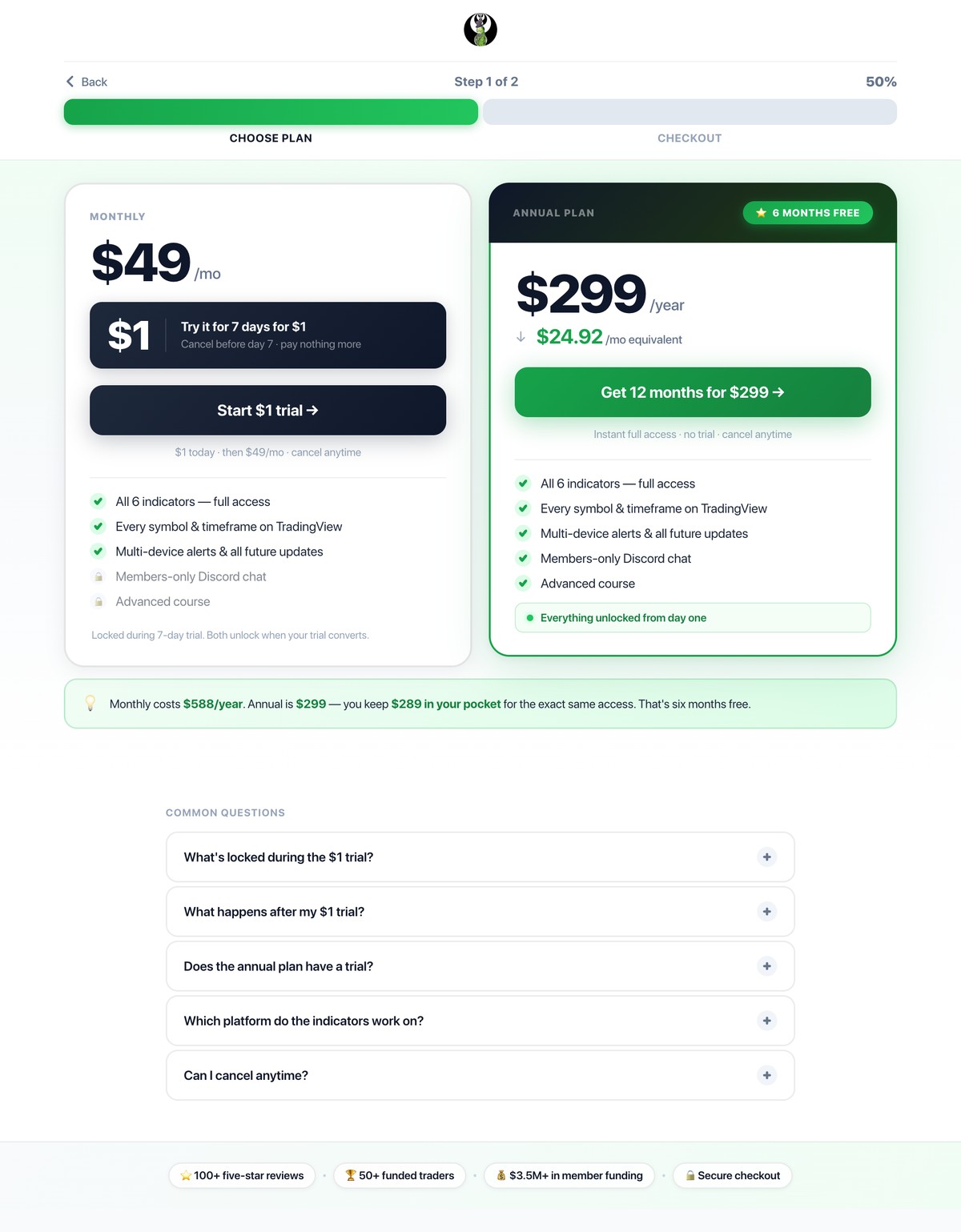
Our original setup ran every user through a 7-day trial that converted to a $49/mo plan. A pricing analysis I ran showed there was still real money on the table. I added a $299 annual paid upfront and a $550 lifetime upsell offered 30 days in. Today about 10% of new users take the annual upfront, and another ~4% of trial converts take the lifetime upsell. The adjustments to the backend of the funnel (post-purchase onboarding and the extensive email retention system) also lifted our average LTV alongside the new pricing plans. Every one of these iterations was a decision I made off the data we collected over time, which let me see gaps in the funnel economics. Below is the before and after of implementing everything I’m writing about in this case study.
MetricIndustry averageOur results
Funnel conversion rateend-to-end, across all paid traffic
2.35%
7.02%
Avg. time on siteper landing-page session
54s
1m 43s
Every converted user is worth 2.36× more than before.
Average paid-user LTV
Old setupNew setupLift
Paid-user LTVweighted across every paid tier: annual upfront, monthly trial converts (after retention loop), and lifetime upsell
$87$205+136%
What I built
01Traffic
Five organic channels, then paid Meta on top.
I started with a base foundation of organic traffic coming in from X, Instagram, YouTube and TikTok. Lucas’s own audience was the entry point. Once the funnel was converting predictably, I added paid Meta advertising on top to push volume. We’re currently focused on pushing organic content again to take advantage of a cheaper acquisition cost and keep growing the brand.
Every traffic source routes into one landing page I designed. It’s a hybrid format: long-form copy and a video sales letter in the same flow. It opens with a hero section that frames the offer, runs through a rundown of every feature so the buyer understands exactly what they’re getting, hands off to a VSL that communicates the same value through video for people who’d rather watch than read, then closes with social proof from real members. This structure takes advantage of both buyer archetypes: those who respond best to text and those who respond best to video are both effectively converted by the same funnel. It’s the frontend entry point for every lead.
Hero
Sets the offer in one screen. Brand promise, headline, and the primary CTA above the fold.
Feature rundown
Walks through every indicator individually with proof. Builds the case logically before the buyer ever sees a price.
VSL · click to listen
The same offer delivered through video for buyers who’d rather watch than read. Lucas explains the product in his own voice.
Testimonials
Real members, real screenshots, real outcomes. Closes the page with social proof.
Ad-to-LP congruency. Five specialised hero variants.
I built split variations of the hero section using a concept called ad-to-LP congruency: the landing page copy should mirror whatever messaging brought the visitor in. If a piece of content over-indexed on a specific angle of the product, I routed that traffic to a variant tuned to that exact angle. The result was meaningfully higher conversion and lower bounce. The message never breaks between the click and the page. This is one of the highest-leverage plays you can run to lift frontend conversion, because messaging drop-off is one of the fastest ways to lose a lead. Most teams skip it because it means building multiple landing-page variations and the systems to route traffic correctly, but the results are well worth the effort.
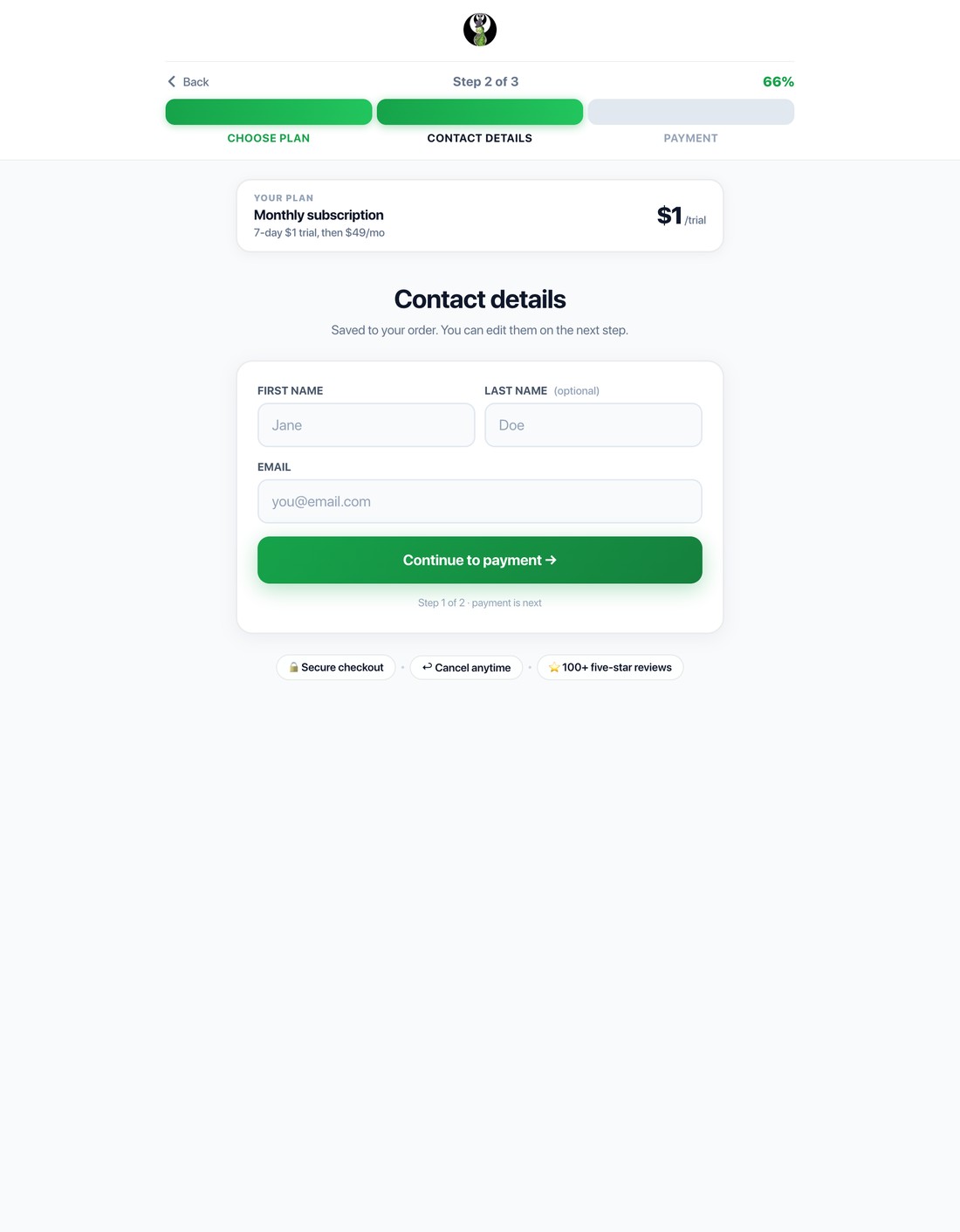
From the landing page they hit a pricing page I designed, which feeds into an embedded Whop checkout. The point here was to stay congruent with the funnel styling and brand. In a pricing-and-checkout flow, two things matter most: congruency and speed. You never want to push people to an external checkout that’s slow or looks foreign to the buyer. Doing this custom creates meaningful gains from users that no longer drop off.
tradingsoftware.com/pricing
checkout.whop.com
05Post-purchase quiz
Reframe the buyer using consumer psychology.
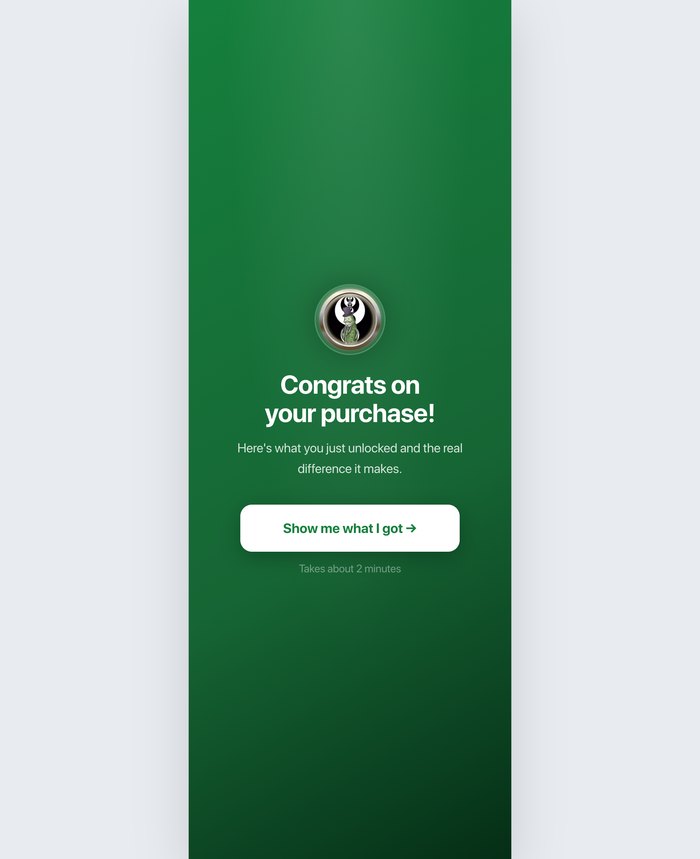
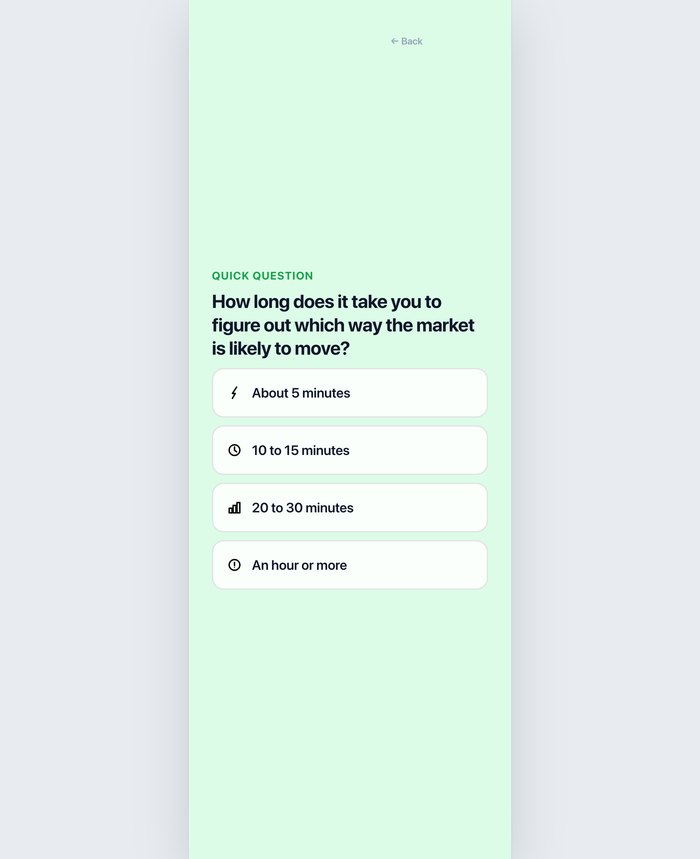
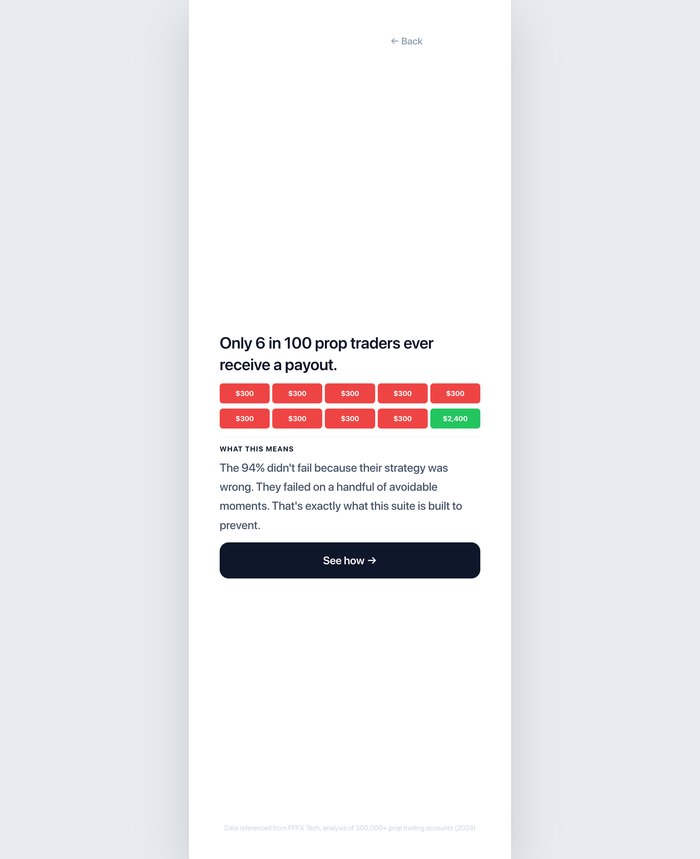
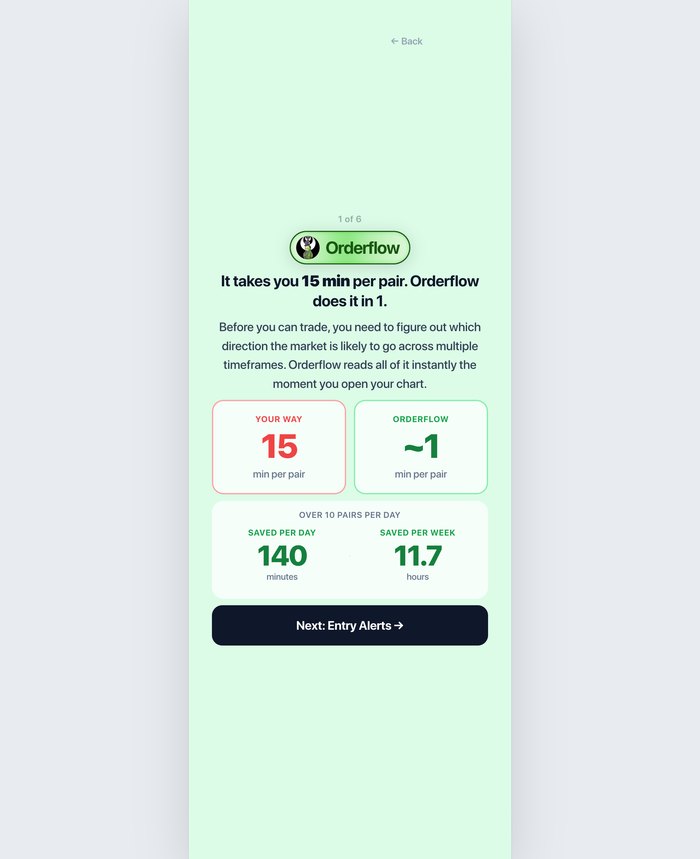
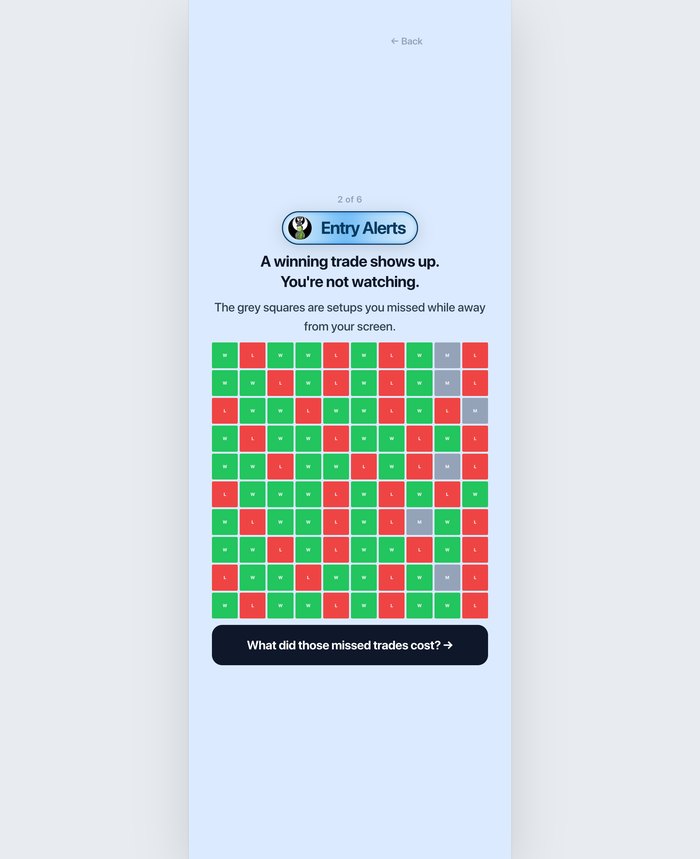
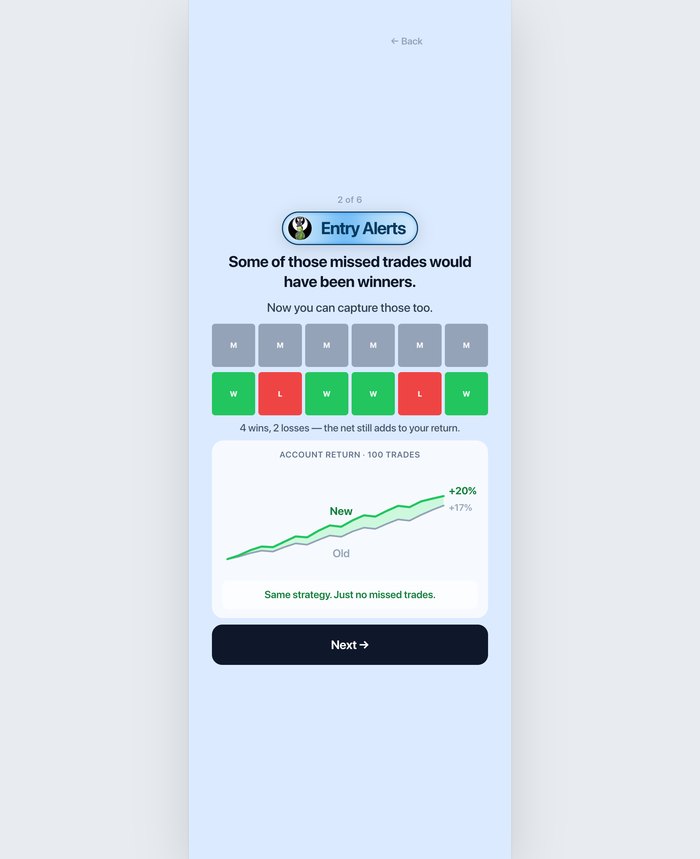
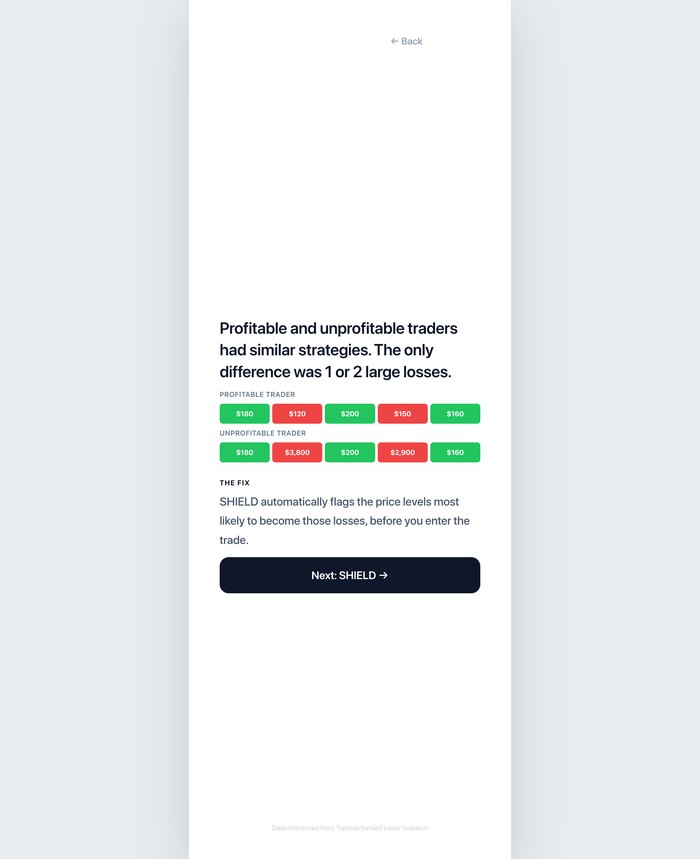
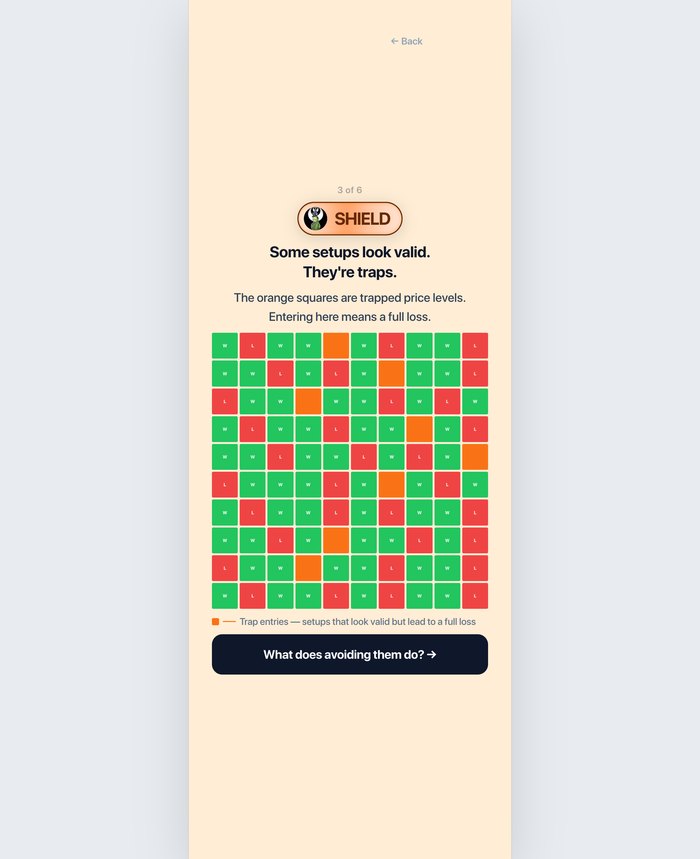
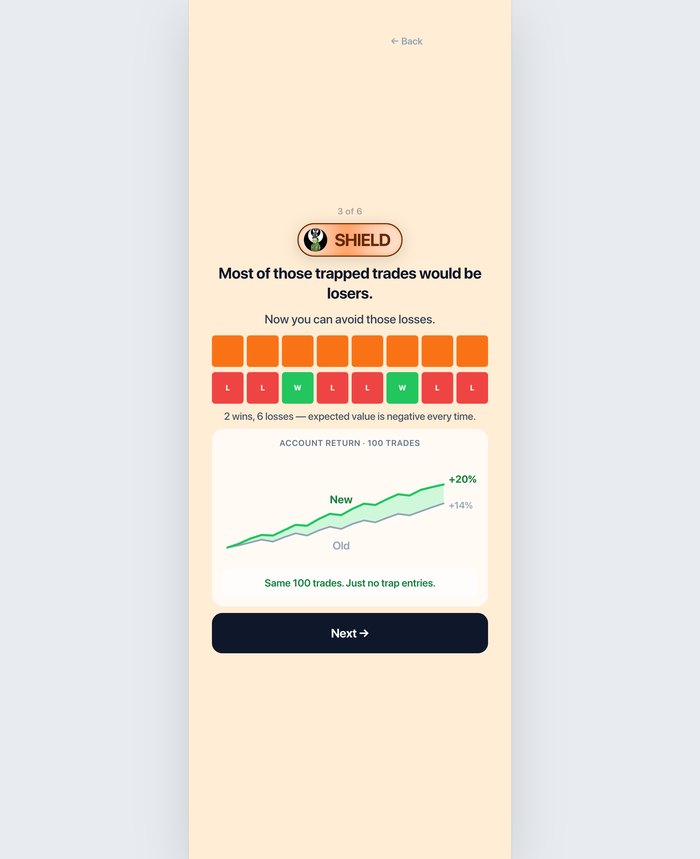
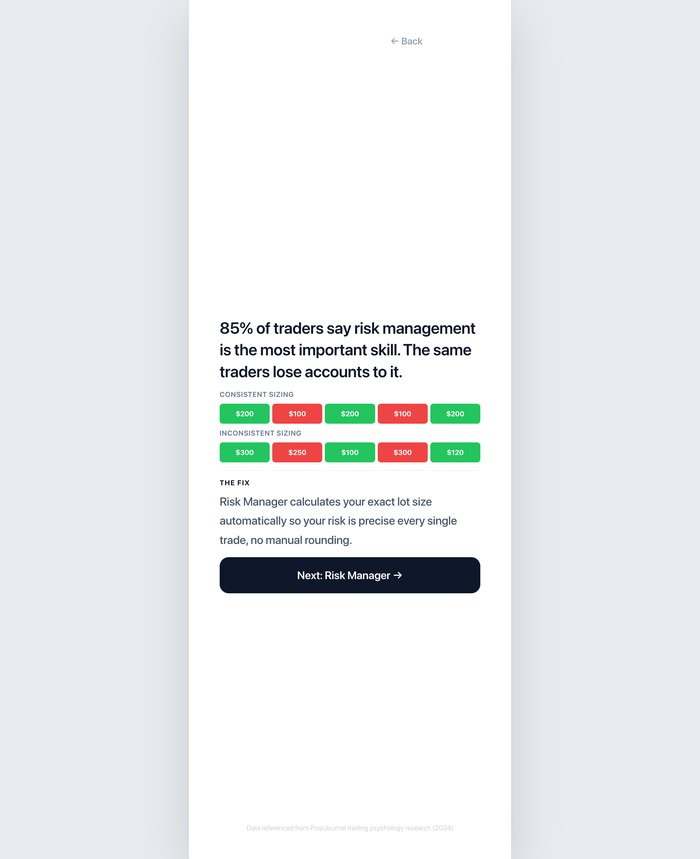
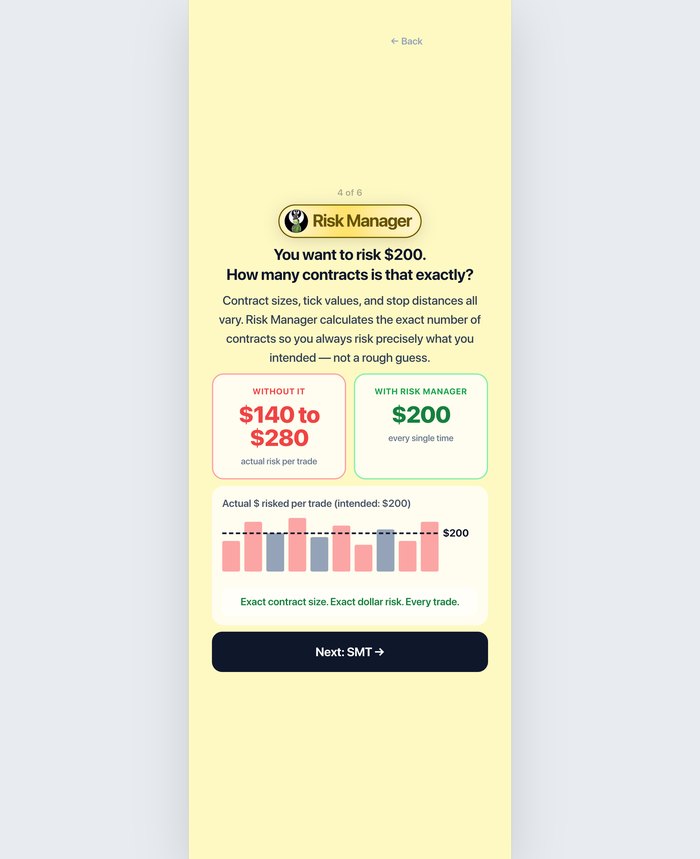
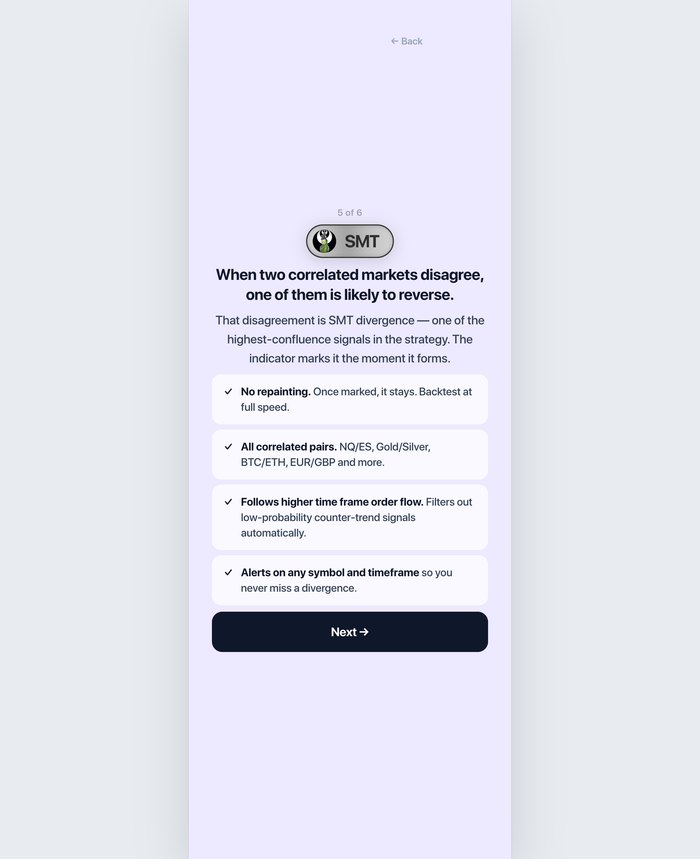
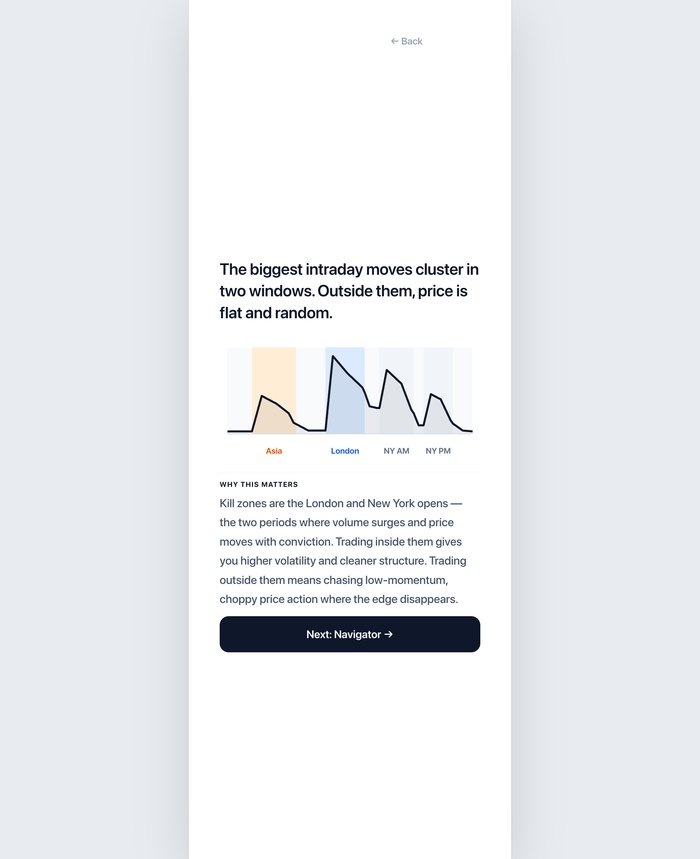
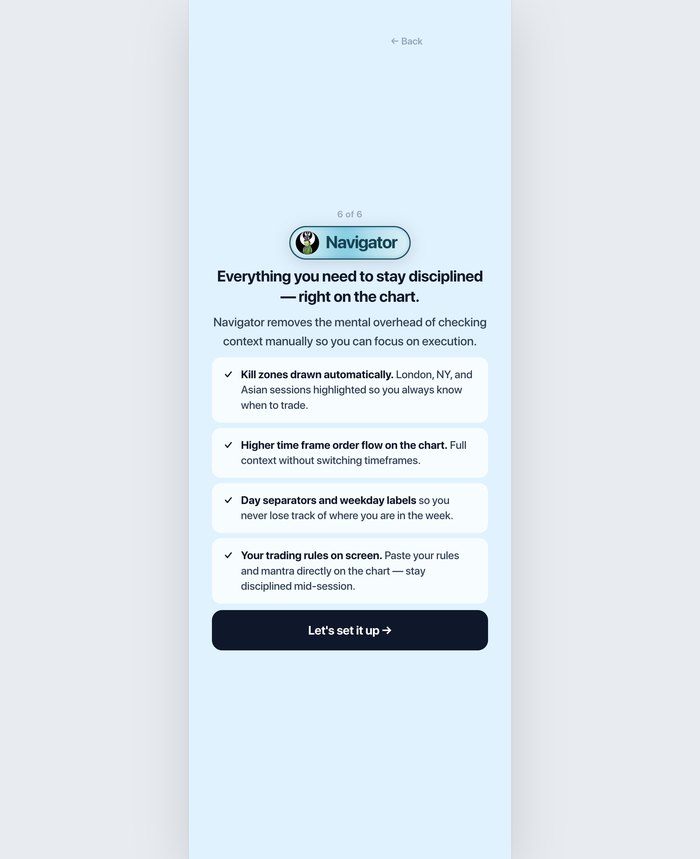
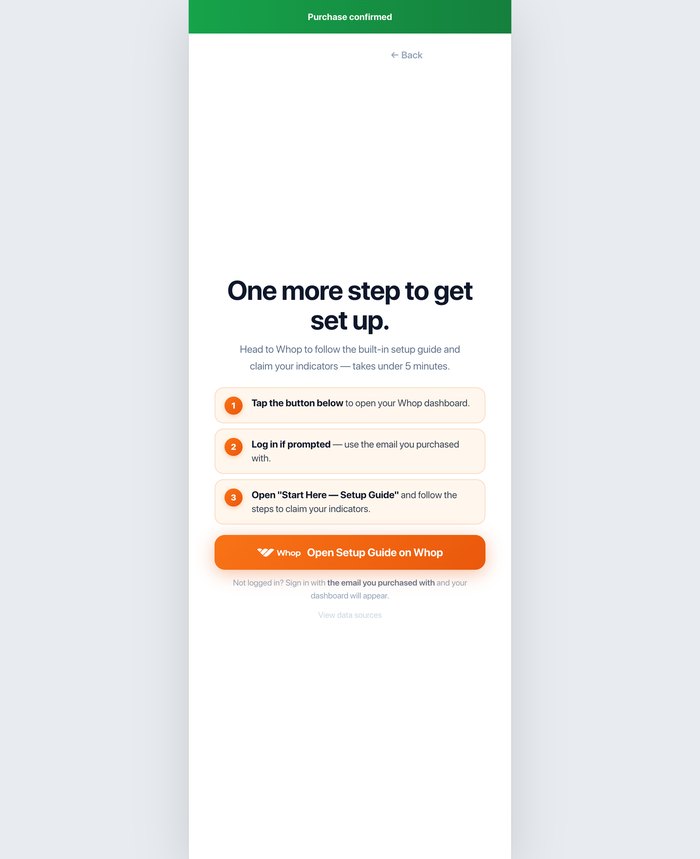
Once they purchase, they get funnelled into a 15-step post-purchase quiz I built. The onboarding-quiz format is common in consumer mobile apps, and it’s hyper-relevant in marketing funnels too: it’s here to re-affirm the purchase and to provide context that pushes them to action. I don’t push them directly. I surface third-party data and insights so the user arrives at their own conclusions. For a software product, the next step is setup. This reframe is the first step of the retention loop that lifted trial-path LTV. Why? By framing the buyer into the right mindset going into the product, you meaningfully increase their willingness to actually use it while simultaneously re-selling them on why they bought in the first place. You always need to consciously link the why with the product.
Step 09Step 13
Two of the reframe screens, shown full-size. Below: the whole 15-step sequence.
01
02
03
04
05
06
07
08
09
10
11
12
13
14
15
15 steps
06Onboarding
The onboarding process from paid signup to active user.
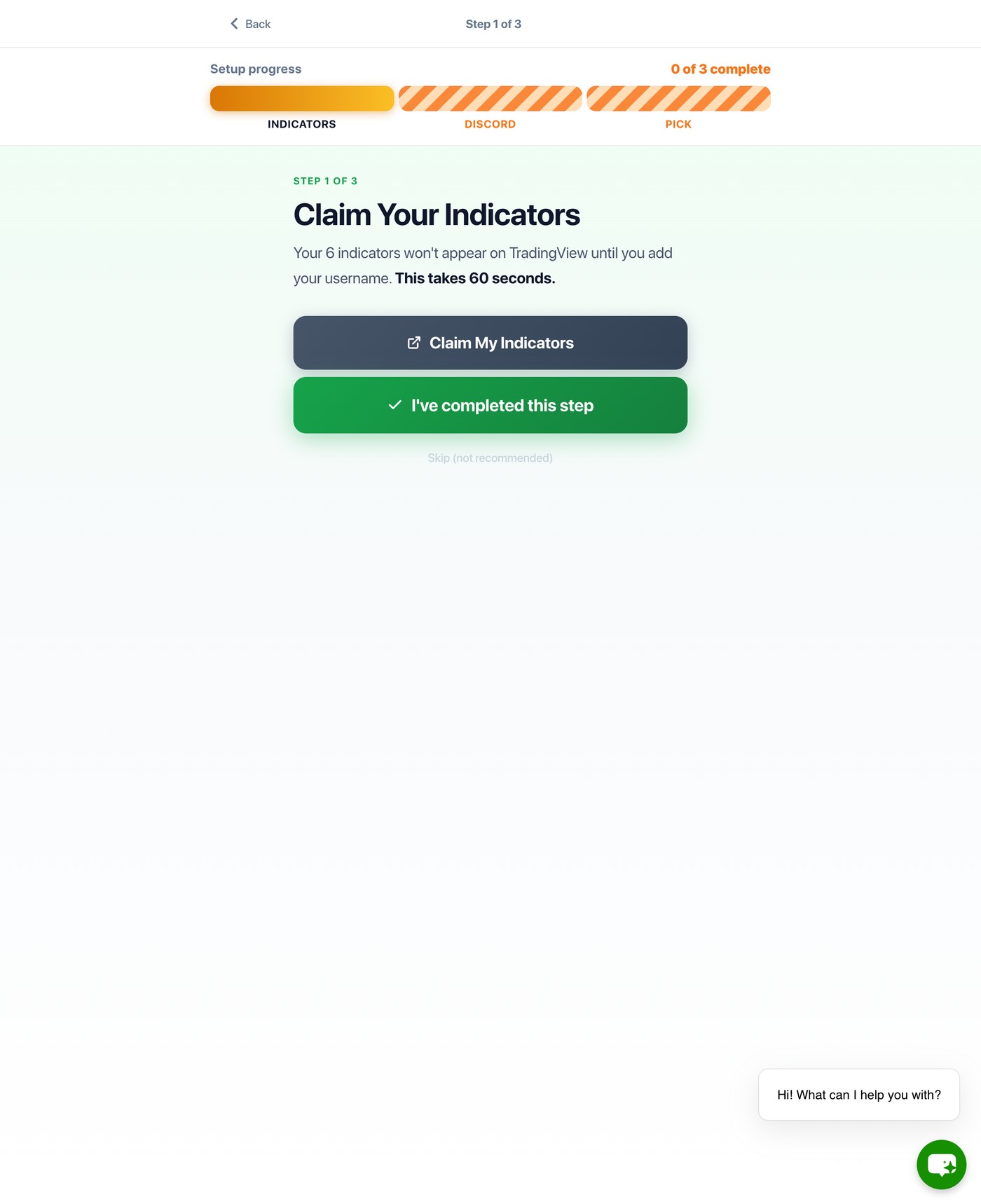
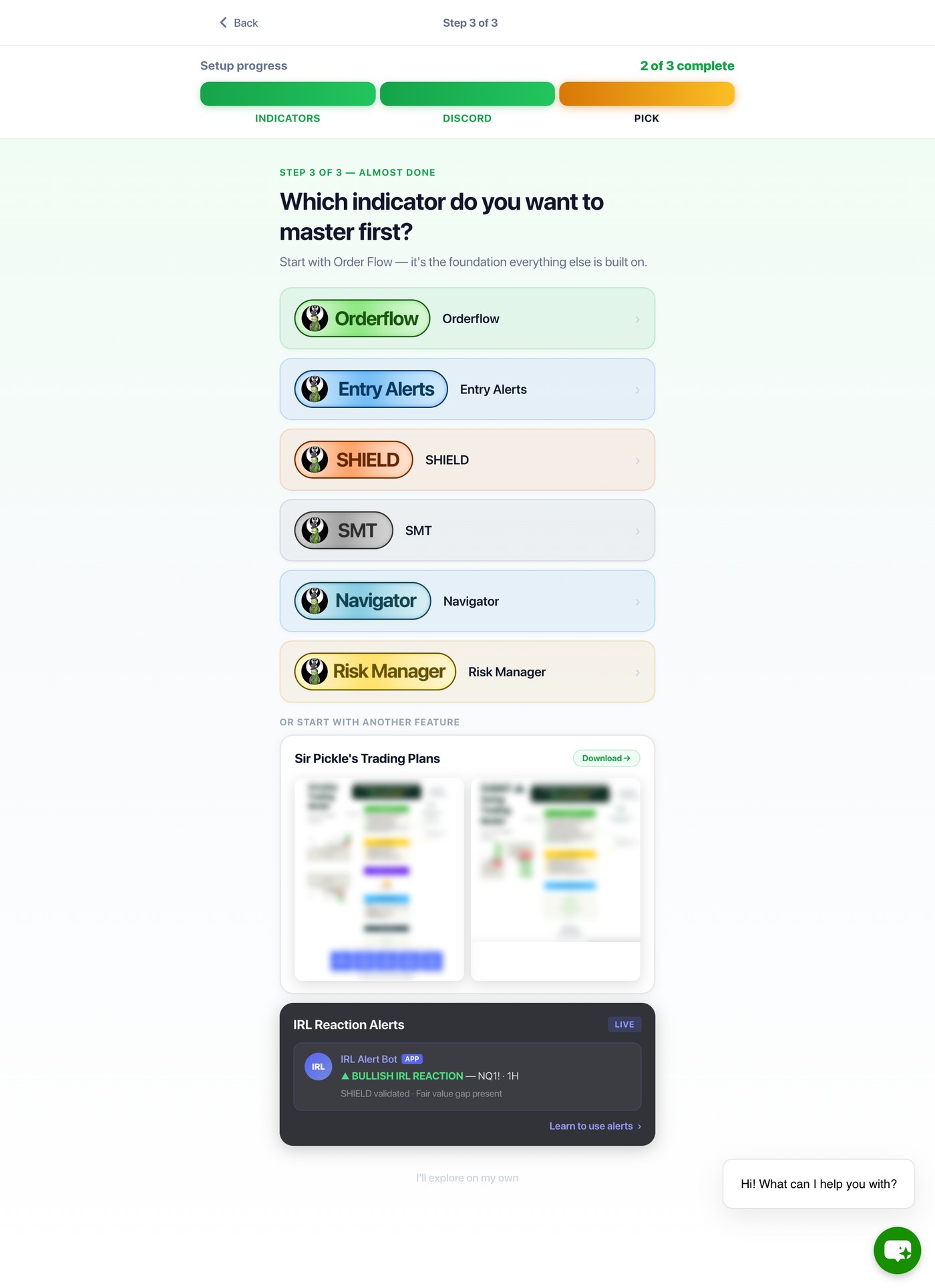
From there, a linear onboarding flow I built picks up where the quiz ends. It walks the user through installing the tools, joining Discord, and configuring the first indicator. The whole thing runs on a Cloudflare Worker I wrote in order to take advantage of local caching. That lets us save a user’s progress permanently in their dashboard, so if they leave and come back they pick up exactly where they left off. That tiny tweak made a huge difference to the percentage of successful onboardings. Onboarding completion is the second step of the retention loop, feeding directly into the LTV gain. We lost fewer users to churn because they actually set up and used the product.
Step 01 · Step 02
07Email system
The email retention system.
A full email system I wrote and shipped, running alongside the onboarding. The trial sequence walks every new sign-up through the product, 9 emails over 7 days. Once they pay, the post-purchase nurture takes over for the next 50 days, 13 more emails that keep them activated and using the tools. Together with the quiz and onboarding work, the email system took average trial-path LTV from $80 to $131.
Trial sequence9 emails · 7 days
123456789
Day 1Day 7
Post-purchase nurture13 emails · 50 days
12345678910111213
Day 0Day 50
Example of one of the designed emails
Inbox · trial sequence email
08Tracking
Analytics and tracking.
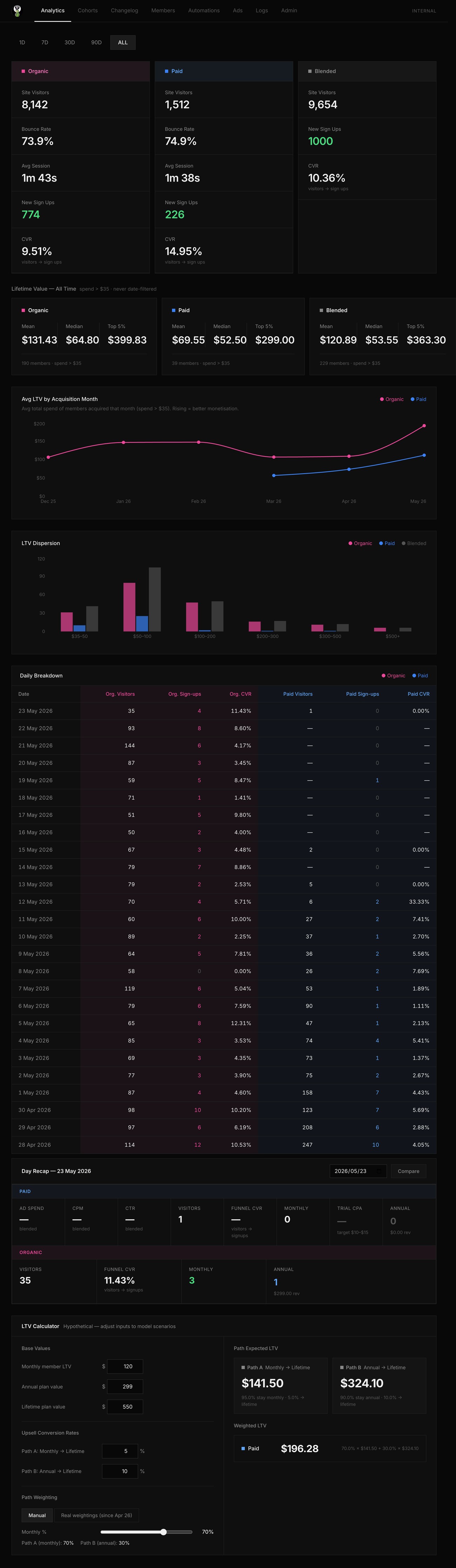
Every signal (signups, conversions, churn, revenue, LTV) lands in a single dashboard I built on Vercel and Next.js. Every funnel decision since launch has been read off this one screen, because it’s vital to take real data into account instead of gut. Plenty of the changes we’ve A/B tested are ones I either wouldn’t have thought of, or wouldn’t have expected to win, that ended up making more money in the long run, proven by the data.
tradingsoftware-dashboard.vercel.app
09Pricing strategy
The pricing analysis that lifted paid-user LTV from $87 to $205.
The original setup ran every user through a free trial that converted to a single $49/mo plan. A pricing analysis I ran a year in surfaced two extra tiers we could add. Deciding how to price them was the hard part, and so was deciding when to offer them. I pulled our historic pricing data and looked at four key variables:
Average LTV
Average duration of a paid user
Trial conversion rates
Demographic splits (where our most valuable users came from)
Below is a fictional representation of what a user-LTV dispersion graph looks like. It lets me see where the majority of users land, which I can then use to predict price sensitivity. A clear drop-off before a certain price point means there’s sensitivity to that band. Using this, I designed two new plans. The lifetime upsell targets the upper-end cluster of users and the lifetime spend they were already producing, so I could model a price that maximised LTV without crossing into real sensitivity. The annual plan does the same for a lower-end user type. The offer framing of “pay for 6 months, get the next 6 free” was a very strong frame given the data and the psychological effect, which made annual a no-brainer to ship. Both changes had significant effects.